Control processes efficiently, securely, and automatically

Industrial Process Control – Automated, Connected, and Secure

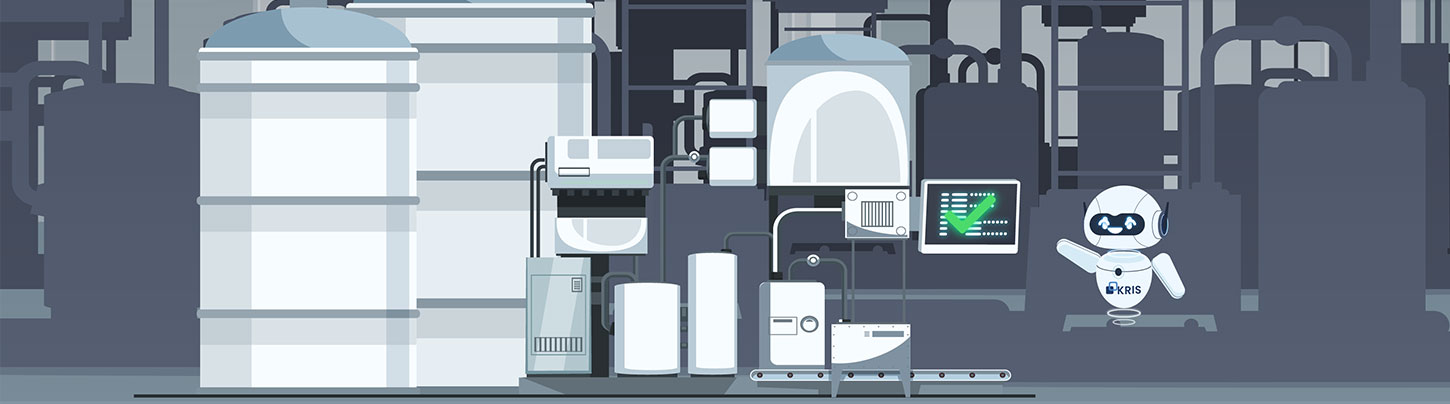
Process control refers to the monitoring, control, and regulation of production processes to ensure that products are manufactured efficiently and in accordance with established specifications. By employing various methods and technologies (control loops, sensors, actuators, control logic), the production process can be optimized, product quality can be ensured, and deviations can be detected and corrected at an early stage.

What is industrial process control?


  1. Real-time monitoring of production parameters: Process control involves the continuous monitoring of production parameters such as temperature, pressure, flow rate, speed, and other variables that are critical to quality and efficiency. Sensors and other measuring devices are frequently used for this purpose.
  2. Automatic control and correction of deviations: Process control involves the implementation of control algorithms that enable the process to be automatically corrected when deviations are detected. For example, control systems can adjust valves, change machine parameters, or trigger alarms to keep the production process within specified limits.
  3. Automation with PLCs and Industry 4.0 technologies: Modern process control systems utilize automation technologies such as programmable logic controllers (PLCs), networked production systems, or Industry 4.0 solutions to minimize manual intervention and maximize efficiency.
  4. Data analysis and continuous process optimization: Process control often involves analyzing collected data to identify patterns and continuously improve the production process. Methods such as statistical process control (SPC) are used for this purpose.

KRIS as an Operational Process Control System

With process control, KRIS takes on an operational role in addition to its informational one. The system operates directly at the machine and actively intervenes in the production process—for example, by automatically adjusting machine parameters when deviations are detected. This ensures seamless and error-free implementation of production specifications. Furthermore, the system monitors all parameters and notifies you immediately if problems arise. This ensures that the entire process remains within the optimal range at all times—efficient, safe, and reliable.

Learn how process control works in variety-based production with KRIS recipe management here.

How we proceed with the implementation of your project

Planning and Implementation of a Process Control System


Requirements Method    
Which plant components are to be monitored and controlled by a process control system? Check which controllers need to be connected to the system.    
Should the system actively intervene in the control process, or is it intended solely for monitoring? Check plant networks and access rights.    
Where should the system be operated and edited? Control room, office, remote.
Check the IT/OT structures, taking into account the security rules.
   
Is additional programming required in the control system or on third-party systems? Check existing PCS7 programs.
Define interfaces to QLS or similar.


We offer complete solutions

Our Services in the Field of Process Control

Beratung

Consultation & Planning

  • Development of concepts.
  • Review of system landscapes for feasibility for recipe management.
  • Technical and economic evaluation.
Nachrüstung

Retrofitting

  • Retrofitting recipe systems in existing control technology landscapes
Einrichtung

System Delivery

  • Planning, configuration, and commissioning of the necessary hardware and software in the existing infrastructure
Systembetreuung

System Support

  • Long-term maintenance and support of the systems through updates and customer contact

Why KRIS

Advantages of KRIS Process Control

Maximum plant availability through predictive fault detection

Reduction in manual intervention through fully automated control loops

Comprehensive documentation of all control operations

Scalable integration into existing automation infrastructures

Enhanced process reliability through defined limit value monitoring

Do you need support with your project? Contact us now! We look forward to hearing from you!

Or book a free initial consultation directly.

Your direct

Contact Persons